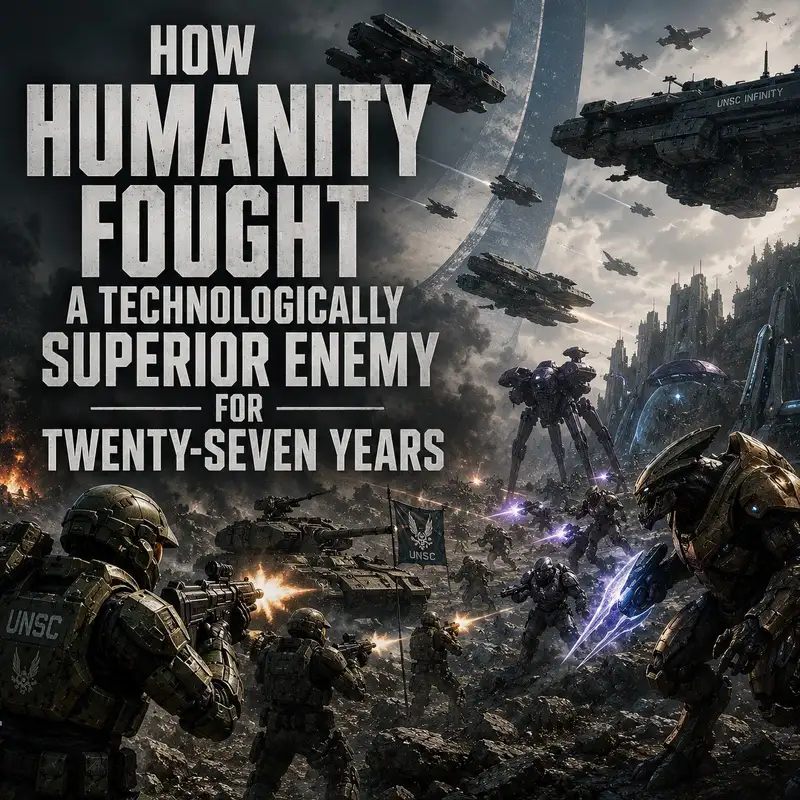
How Humanity Fought a Technologically Superior Enemy for Twenty-Seven Years
Humanity does not survive the Covenant War because its military technology suddenly becomes superior. For most of the conflict, Covenant ships possess better shields, weapons, propulsion, and slipspace capability, while their armies benefit from technologies inherited from the Forerunners. This episode brings together the institutional reasons the UNSC nevertheless remains in the war from 2525 to 2552. Human industry produces enormous quantities of conventional equipment. The Navy concentrates firepower and learns through catastrophic losses. Marines, Army soldiers, Air Force personnel, ODSTs, and Spartans repeatedly force the enemy to fight for objectives it expected simply to take. ONI gathers intelligence and develops capabilities that conventional research cannot provide. Logistics, colonial depth, emergency mobilization, and the Cole Protocol slow the Covenant’s advance toward Earth. Humanity ultimately survives because it keeps functioning while losing: replacing units, adapting doctrine, exploiting enemy mistakes, and refusing to collapse before the Covenant’s own political and religious contradictions finally tear it apart. Visit ImaginedBattlefield.com for more military and science fiction.