The Battle for Earth Begins
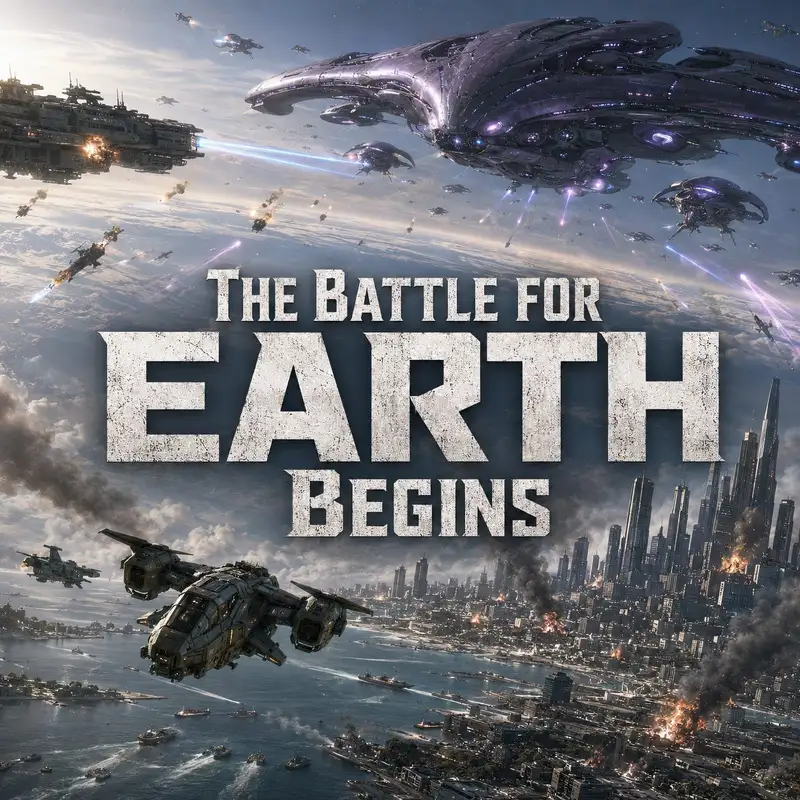
Fleet Admiral Terrence Hood’s first important decision was to keep the Home Fleet close to Earth’s orbital guns. Fleet Admiral Joseph Harper wanted to move against the Covenant force as it approached. Hood refused to let the defenders abandon the weapon system that made Earth different from every colony already lost. The incoming fleet was small by Covenant standards, but its ships carried energy shields, plasma weapons, and two assault carriers able to deploy armies. On October twentieth, twenty-five fifty-two, Earth’s defense began with restraint. Humanity had spent decades charging stronger fleets because there was often nothing else to do. This time, the planet had guns worth waiting beside.
The warning reached Earth through Io Station as Covenant ships crossed the outer system near Jupiter. Only fifteen capital ships had arrived: thirteen Ket-pattern battlecruisers and two assault carriers, Solemn Penance and Day of Jubilation. The fleet that destroyed Reach had been vastly larger, as had the armada destroyed at the Unyielding Hierophant before it could reach Earth. Human commanders therefore faced a confusing intelligence picture. One expected invasion had been disrupted. A different force had appeared without warning, carrying one of the Covenant’s three ruling Hierarchs. The fleet’s small size did not make it less dangerous. It made its purpose harder to understand.
The High Prophet of Regret had not come to conquer humanity’s homeworld. He did not know he had found it. A Forerunner Luminary recovered after the fighting on Meridian had revealed coordinates associated with a portal leading to the Ark. Regret gathered an excavation force and departed before a larger campaign could be organized. Covenant religious doctrine treated Forerunner sites as sacred inheritances, while political competition rewarded the Hierarch who claimed them first. Regret’s haste produced a fleet strong enough to suppress a remote archaeological objective and too small for a deliberate assault on Earth. He arrived expecting a relic. He found the center of human military power.
That misunderstanding shaped the entire opening battle. The United Nations Space Command believed the Covenant had finally located Earth and begun the extermination campaign everyone had expected since the Cole Protocol was adopted. Regret believed human resistance happened to occupy the Forerunner world he intended to excavate. Neither side possessed the other’s objective. Human commanders prepared to defend the planet, preserve government, and prevent a route to the surface. Regret needed to break through long enough to reach East Africa and determine why a supposedly sacred site contained humanity’s largest concentration of warships. The battle began with both sides correctly identifying the enemy and misunderstanding why the enemy was there.
Earth was not merely another inhabited world. It contained the institutions of the Unified Earth Government, major naval commands, industry, shipyards, population, and the communications architecture coordinating what remained of humanity’s interstellar war. Reach had been the great forward fortress. Earth was the political and logistical center behind it. Losing the planet would not necessarily kill every human elsewhere, but it could fragment the remaining colonies and fleets into forces unable to share intelligence, allocate production, or sustain a unified campaign. The defenses around Earth were therefore designed not only to win a battle, but to preserve the machinery through which any future battle could still be organized.
By October, roughly three hundred orbital defense platforms protected the planet. They were grouped so that magnetic accelerator cannon fire from several stations could overlap and support nearby naval formations. Cairo Station, Athens Station, and Malta Station formed one such cluster above the Mediterranean region. Each platform centered on a gun capable of severely damaging or destroying Covenant capital ships under favorable conditions. The system’s strength came from concentration. Covenant vessels approaching the planet had to cross firing lanes while human ships used the stations as heavy artillery. Its weakness was equally clear. A fixed gun could not evade, and the people operating it remained vulnerable to boarding.
Harper’s Fifth Fleet formed an important part of the mobile defense. It included eight Marathon-class heavy cruisers and sixty-seven Stalwart-class light frigates, though Earth’s wider defensive network contained additional ships and aerospace assets. Hood’s order kept those vessels near the orbital clusters rather than sending them into an unsupported pursuit. The fleet could screen the stations, attack ships whose shields had been weakened, and force Covenant commanders to divide attention between mobile targets and fixed guns. The orbital platforms provided destructive power. The fleet provided movement, point defense, and the ability to exploit openings. Neither could perform the other’s work.
The Fleet of Sacred Consecration entered normal space outside the most effective range of the orbital guns and began advancing. Regret’s battlecruisers engaged the Home Fleet while the two carriers moved toward the defense grid. A direct exchange against hundreds of platforms would have been suicidal even for Covenant ships. The attackers therefore targeted the network rather than the guns’ armor. Hundreds of small boarding craft raced toward selected stations carrying Sangheili, Unggoy, and antimatter charges. The method was expensive in assault troops and transport craft. It was still cheaper than exposing capital ships to repeated magnetic accelerator rounds.
Cairo Station had been serving as Hood’s command post when the attack began. John-One One Seven, Avery Johnson, and Commander Miranda Keyes were present for a ceremony recognizing actions whose consequences had barely been processed. Reach had fallen. Alpha Halo had been destroyed. The Unyielding Hierophant and its invasion fleet were gone. The personnel on Cairo had moved from disaster to ceremony because military institutions occasionally schedule recognition between emergencies. The incoming Covenant contacts ended the proceedings and returned the station to its intended purpose. Cortana entered Cairo’s systems, Hood directed the defense, and boarding alarms spread through the platform.
The Covenant boarders did not need to seize Cairo permanently. They needed to deliver one charge, secure the surrounding compartment, and leave before detonation. Human Marines and station personnel fought through their own corridors while boarding craft continued arriving outside. This was naval combat conducted inside the weapon platform rather than between ships. Every locked door, pressure boundary, lift, and armory became part of the defensive plan. The station’s magnetic accelerator cannon remained valuable only while its crew, power, computer systems, and internal structure stayed connected. A bomb in the right compartment could remove all of them at once.
Athens and Malta Stations reported that the Covenant attackers were withdrawing. The apparent retreat was the final stage of the assault. Antimatter charges left aboard both platforms detonated, destroying the stations and everyone unable to escape. Their loss opened a hole in the Mediterranean defense cluster and forced the ships nearby to cover a wider volume with fewer guns. The attacks demonstrated careful Covenant adaptation. The fleet had not spent hours testing the platforms’ armor. It had bypassed the armor, placed weapons inside, and turned the defenders’ relief at repelling boarders into the moment of destruction.
Cortana identified the same pattern aboard Cairo before its charge detonated. John reached the bomb, removed it from the station, and carried it into open space. The action is remembered because one Spartan physically returned a Covenant weapon to its owners. Its operational meaning depended on the fleet around him. The Day of Jubilation had passed through the damaged cluster, but human ships had stripped its shields while pursuing it. John did not destroy an untouched assault carrier through personal strength. The Home Fleet created a vulnerable target, Cairo’s surviving systems provided the route, and the Covenant supplied the explosive.
The antimatter charge detonated inside Day of Jubilation and destroyed the carrier. One of the two largest ships in Regret’s fleet disappeared without requiring a direct duel against another capital ship. The exchange also preserved Cairo Station and Hood’s command post. It was a major tactical success built from boarding defense, fleet fire, artificial-intelligence analysis, and one highly unusual delivery method. It could not be repeated routinely. Human fleets did not possess a convenient supply of enemy antimatter bombs, shieldless assault carriers, and Spartans positioned between them. The operation solved one immediate problem, which is generally the most military planners can demand from an improvisation involving vacuum and no extraction vehicle.
The Solemn Penance used the opening created by Athens and Malta to break through the defense grid. Most of Regret’s battlecruisers remained engaged or were destroyed by the numerically superior human force. The flagship did not remain to win orbit. It drove toward Earth and descended above New Mombasa. That maneuver preserved Regret and his excavation objective while leaving much of his fleet to absorb the defense. From a Covenant religious perspective, the Hierarch and the Forerunner portal mattered more than the escorting ships. From the viewpoint of those escort crews, doctrine had assigned them the familiar honor of dying so that someone politically important could continue the mission.
The carrier’s descent changed the nature of the battle. Earth’s defenders had not achieved orbital control merely because most of the invading fleet was being destroyed. One assault carrier had crossed the grid and could now deploy troops, aircraft, armor, and excavation personnel beneath the safest firing angles of the orbital platforms. Heavy fire against a ship hovering over a major city risked destroying the population and infrastructure the defense existed to protect. The Covenant had traded naval survival for a hostage-like position over urban terrain. Earth’s strongest weapons became harder to employ precisely because the enemy had reached Earth.
New Mombasa was a major commercial and transportation center in the East African Protectorate. Its port, highways, public transit, corporate towers, municipal systems, and connection to the Mombasa Tether made it important before anyone understood what lay beneath the region. The space elevator linked ground infrastructure with orbital traffic and made the city valuable to both military logistics and civilian movement. Regret did not select the location because of its human economy. His Luminary pointed toward the Forerunner portal complex buried beneath East Africa. The city happened to occupy the approach to a target built before modern humanity existed.
For civilians, that distinction offered no protection. Public systems shifted from ordinary movement to emergency instructions while aircraft and armored units entered the city. Evacuation routes competed with military traffic. The tether, highways, and transit corridors that made New Mombasa efficient also concentrated people into predictable paths. A Covenant carrier overhead could deploy forces faster than local authorities could clear every district. Some residents escaped before the fighting intensified. Others remained in shelters, workplaces, hospitals, or vehicles as the city’s infrastructure failed around them. The military map showed landing zones and avenues of approach. The same lines were routes home for people who had never been told why the Covenant had chosen their city.
Regret’s troops established positions around the Uplift Nature Reserve and pushed into both Old and New Mombasa. Phantoms and Banshees provided mobility and air cover. Infantry secured buildings, transit routes, and observation points. Wraiths and Scarab platforms supplied heavy firepower against prepared positions and the tether’s supporting infrastructure. Huragok and other specialists supported the search for Forerunner systems. This was not a force designed to occupy an entire planet. It was large enough to dominate a city sector, protect the flagship, and begin locating the portal before human reinforcements could close around it.
Hood’s immediate ground objective was to determine why Regret had landed and, if possible, capture the Hierarch. That order resembled the central idea behind Operation Red Flag, but on a smaller and much less controlled battlefield. Humanity had once planned to seize a Prophet by infiltrating the Covenant’s political center. Now a Prophet had delivered himself to Earth with one surviving carrier. Capturing him could provide intelligence, bargaining leverage, and an explanation for the attack. Killing troops in the streets was necessary. Reaching Regret was the purpose that gave those engagements operational meaning.
Commander Miranda Keyes brought the Stalwart-class light frigate In Amber Clad toward the city and deployed Marines, vehicles, and John to reinforce local defenders. The frigate remained vulnerable to the carrier and Covenant air power, but it could move troops across terrain already blocked by fighting. Pelicans inserted forces near threatened positions and recovered survivors where air corridors remained open. Ground units established routes through the reserve, Old Mombasa, and the approaches to the tether. The action depended on repeated local concentrations. A Marine platoon could hold an intersection. It still required aircraft, armor, communications, and naval support to turn that intersection into a route toward the objective.
Urban terrain reduced some Covenant advantages while creating others. Buildings limited long sight lines and forced aircraft to approach through channels. Streets confined armored vehicles and offered defenders cover, elevated firing positions, and opportunities to attack from several levels. The same terrain interfered with communications, trapped civilians, and allowed Covenant infantry to fortify structures overlooking movement corridors. Human troops could destroy isolated positions and still find the next block controlled by forces inserted from above. New Mombasa was not a simple front line. It was a vertical battlefield extending from tunnels and roads through rooftops, airspace, the tether, and the carrier overhead.
The Covenant Scarab became the most visible ground threat because it combined mobility, armor, and a weapon capable of destroying fortified positions and infrastructure. One such platform advanced through Old Mombasa while Marine forces attempted to reach the carrier. Human units used the city’s constrained routes to limit its movement and brought concentrated fire against it. John’s participation mattered at the point of attack, but the Scarab did not appear alone and was not defeated in isolation from the wider battle. Marines, vehicles, air support, and local control of the approaches made it possible to close with a machine intended to dominate open ground.
By late in the engagement, the United Nations Space Command had pushed much of Regret’s ground force back toward the flagship’s position. The Covenant expedition had lost most of its ships in orbit, one assault carrier had been destroyed, and human units were approaching the remaining carrier from the ground. Regret’s original assumption had failed. The portal site was not an undefended archaeological objective. It was beneath the homeworld of the species his government had spent twenty-seven years trying to exterminate. Remaining over New Mombasa risked capture or destruction once the Home Fleet reorganized around the surviving orbital grid.
The United Nations Space Command also prepared Operation Bumrush, an Orbital Drop Shock Trooper assault intended to infiltrate Solemn Penance and force the carrier down. Alpha-Nine, led by Gunnery Sergeant Edward Buck, was among the units launching from the heavy cruiser Say My Name. Captain Veronica Dare carried a separate Office of Naval Intelligence requirement connected to the city’s Superintendent and the data stored beneath New Mombasa. The drop therefore combined a direct-action mission with an intelligence objective not fully shared across the force. The operation required precise timing around a target already preparing to leave. Several urgent plans were occupying the same airspace.
Regret chose withdrawal before the assault could reach him. Solemn Penance initiated a slipspace transition inside New Mombasa’s atmosphere. Covenant drives could perform maneuvers that human ships would not attempt under normal conditions, but the transition was not harmless. The rupture produced a violent shockwave, severe structural damage, and a vast crater across the city. Buildings, transit systems, military positions, and civilian areas were torn apart. Drop pods already descending were scattered, leaving Alpha-Nine separated across an occupied city. In Amber Clad followed the carrier into the slipspace wake because losing Regret meant losing the best available explanation for why the Covenant had come.
The jump ended the first human counterattack without ending the battle for Earth. Regret escaped with Solemn Penance and later reached Installation Zero Five. In Amber Clad disappeared after him with personnel Earth’s defenders could not easily replace. New Mombasa remained damaged, partially occupied, and exposed. The crater created by the transition helped reveal the Forerunner complex beneath the region. Covenant units that survived the withdrawal continued operating, while additional forces loyal to the Prophet of Truth arrived to secure and excavate the portal. A retreating carrier had converted one city battle into an extended campaign over the object Regret had come to find.
Alpha-Nine’s scattered survivors became part of that continuing fight. Dare’s intelligence mission eventually led them to the Huragok known as Quick to Adjust, which had absorbed data from the Superintendent. The information helped confirm that the Covenant was searching for the Ark and that the city’s buried systems mattered far beyond local defense. This intelligence was not available when Hood made his first decisions in orbit. The Earth Defense Coordination Zone knew where the enemy had landed. It did not yet know that a Forerunner portal beneath East Africa would become the strategic center of the war.
The opening day was therefore a clear human tactical victory and an incomplete operational success. The Home Fleet destroyed most of Regret’s expedition. Cairo Station survived. Day of Jubilation was lost. Solemn Penance’s ground forces were driven back, and the Hierarch abandoned the city before his mission was complete. Earth’s defenses had done what Reach’s defenders could not do against the final armada: they prevented the first Covenant force from establishing immediate control of orbit and the surface together. The difference was not courage. It was the enemy’s limited strength, its poor intelligence, and a defensive system able to concentrate ships and orbital guns around one planet.
The same day also exposed how narrow that advantage was. Two orbital platforms were destroyed by boarding parties. A single assault carrier reached the surface despite three hundred defensive stations around the planet. New Mombasa suffered catastrophic damage from the carrier’s escape. Regret remained alive, and his departure pulled In Amber Clad away from Earth while opening the path toward another Halo installation. Most importantly, the Covenant now knew that Erde-Tyrene was humanity’s homeworld and that the portal to the Ark lay beneath it. The expedition failed to seize its objective. It succeeded in revealing what the wider Covenant would attack next.
The battle for Earth began because Regret arrived with the wrong fleet, the wrong intelligence, and the correct coordinates. Earth survived the opening blow because Hood kept the Home Fleet beside the orbital guns, crews held stations against boarders, and ground forces turned one carrier’s landing zone into a closing trap. Yet the defense could not convert tactical success into a clean conclusion. Solemn Penance escaped through the city, leaving a crater where a transportation network had stood and a route toward the Ark beneath the wreckage. The first day ended with most of the invading fleet destroyed. The reason for the invasion was only beginning to emerge.